


Pittsburg’s housing stock tells the story of the city’s history. Working-class bungalows from the 1940s and 50s sit alongside mid-century ranch homes, 1990s tract developments, and brand-new construction near the waterfront. Each era of building used different plumbing materials, and the oldest homes in Pittsburg are now facing sewer line problems that cannot be fixed with a quick snaking.
If your Pittsburg home was built before 1980, there is a good chance the sewer lateral connecting your house to the city main is original. That means clay tile, cast iron, or in some cases Orangeburg pipe — all materials that have a finite lifespan. Understanding what is under your yard helps you make smart decisions about repair before a failure forces an expensive emergency replacement.
The Pipe Materials in Pittsburg’s Older Neighborhoods
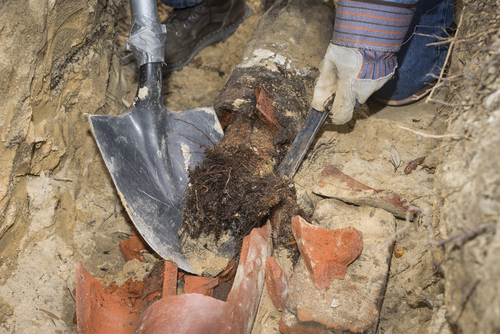
Clay tile sewer pipes were the standard from the early 1900s through the 1970s. They are made of fired clay in two-to-four foot sections joined with mortar. The clay itself is incredibly durable, but the mortar joints degrade over time. Once a joint opens up even slightly, tree roots exploit the gap. Water from the surrounding soil seeps in through the joints too, adding groundwater infiltration that overloads the pipe during wet weather.
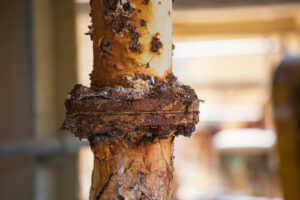
Cast iron pipes were used in many Pittsburg homes built during the 1950s and 1960s. Cast iron is strong and quiet — it dampens the sound of water flowing through it, which is why some builders preferred it. But cast iron corrodes, especially on the bottom of horizontal runs where water sits. After 50 to 60 years, the bottom of the pipe can rust through entirely, allowing sewage to leak into the soil beneath the house.
Orangeburg pipe was a budget option used from the 1940s through the early 1970s. Made of compressed wood fiber coated in tar, Orangeburg was cheap and easy to install. But it was never designed to last more than 50 years. When Orangeburg fails, it typically collapses under the weight of the soil above it, creating a belly or complete blockage that no amount of cleaning can fix.
Homes built after 1980 in Pittsburg generally have ABS plastic sewer lines. These are more resistant to corrosion and root intrusion but can still develop problems at connection points, especially where ground movement has shifted joints out of alignment.
How to Know Your Sewer Line Needs Attention
The symptoms of a failing sewer line are consistent regardless of the pipe material. Multiple slow drains throughout the house at the same time point to a main line issue rather than individual fixture clogs. Gurgling sounds from toilets or drains when other fixtures are in use indicate air displacement in a partially blocked line.
Sewage odors inside the house or in the yard suggest a crack or separation in the pipe. Unexplained wet or soggy patches in the lawn, particularly along the path between the house and the street, mean sewage is leaking out of the pipe and saturating the soil.
The most definitive way to know the condition of your sewer line is a sewer camera inspection. A small waterproof camera on a flexible cable is fed into the pipe through a cleanout. The live video shows the plumber exactly what is happening inside — root intrusion, cracks, offsets, corrosion, bellies, or collapses — and the footage is recorded so you can see it too.
Repair Options for Pittsburg Sewer Lines
Not every sewer line problem requires full replacement. The right repair depends on the type and extent of the damage.
For root intrusion in a structurally sound pipe, hydro jetting clears the roots and restores full flow. This can be repeated periodically as a maintenance measure, especially in yards with large trees near the sewer lateral.
For cracked or separated joints in otherwise intact pipe, trenchless pipe lining installs a new pipe inside the old one without digging. A resin-coated liner is pulled through the existing pipe and inflated, then the resin cures to form a smooth, jointless new pipe. This is ideal for clay tile lines with joint deterioration.
For collapsed pipe or severely deteriorated cast iron and Orangeburg, pipe bursting replaces the old line by pulling a new HDPE pipe through the existing path while fracturing the old pipe outward. Access pits are dug at each end, but the yard between them is left undisturbed.
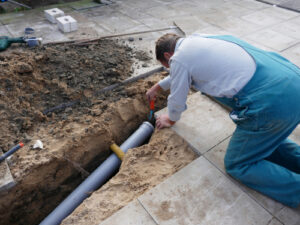
Full open-trench replacement is reserved for the most severe cases — complete collapses, major alignment shifts, or situations where the pipe runs under a structure that prevents trenchless access.
Quality Plumbing & Rooter evaluates every situation on its own merits. We do not push full replacement when a targeted repair will solve the problem, and we do not recommend a patch job when the pipe clearly needs to be replaced. According to the Federal Trade Commission, you should always get a clear explanation of the problem and a written estimate before authorizing work. That is standard practice for us on every call.
Get a Camera Inspection Before Problems Escalate
If your Pittsburg home is more than 20 years old and you have never had the sewer line inspected, schedule a camera inspection. It takes about an hour, gives you a complete picture of the pipe’s condition, and allows you to plan ahead rather than react to an emergency.
Quality Plumbing & Rooter serves Pittsburg and all surrounding communities. Call (925) 584-1951 or schedule a service online.