


Concord’s mature neighborhoods are some of the most attractive in Contra Costa County. The established trees, wide streets, and well-kept yards in areas like Concord Highlands, Dana Estates, and Cambridge Park give these neighborhoods real character. But beneath those beautiful yards, the sewer laterals connecting homes to the city main are dealing with a problem that homeowners cannot see: tree root intrusion.
Root intrusion is the leading cause of sewer line damage in Concord, and it is a slow-moving problem that accelerates over time. Understanding how roots affect your sewer line and recognizing the early warning signs can save you thousands of dollars in repair costs.
How Tree Roots Find Your Sewer Line
Tree roots grow toward three things: water, nutrients, and oxygen. A sewer line provides all three. Even a tiny crack in a pipe joint or a gap where two sections meet gives off moisture and organic gases that roots can detect from several feet away.
Once a root finds its way into the pipe through that small opening, it expands. The root grows thicker as it absorbs the moisture and nutrients flowing through the pipe, and it sends out secondary roots that spread along the interior of the line. Over months and years, the root mass grows large enough to catch debris — toilet paper, grease, food waste — and the pipe gradually clogs.
In Concord, the most common species involved in root intrusion include oak trees, sycamores, liquid amber, and willow trees. But even smaller ornamental trees and large shrubs can cause problems if they are planted close to the sewer lateral path.
Warning Signs of Root Intrusion
Slow drains that keep coming back after cleaning are the earliest sign. You snake the line, it flows freely for a few weeks, and then it slows down again. That pattern almost always indicates roots growing back after being cut by the snake.
Gurgling sounds from the toilet when you run other fixtures suggest a partial blockage in the sewer line forcing air through the vent system.
Frequent toilet clogs that are not related to overuse can indicate roots catching waste material before it reaches the city main.
Sewage odors in the yard, especially after rain, suggest a crack or separation in the pipe where both sewage and gases are escaping into the surrounding soil.
A patch of grass that is significantly greener or grows faster than the surrounding lawn is a classic sign of a sewer leak fertilizing the soil beneath it.
Diagnosing Root Intrusion With a Camera Inspection
A sewer camera inspection is the only way to confirm root intrusion and assess the extent of the damage. The camera shows the plumber exactly where the roots have entered, how dense the root mass is, whether the pipe is cracked or offset, and whether additional problems like bellies or scale buildup are contributing to the drainage issues.
Without a camera inspection, any repair or cleaning is a guess. You might hydro jet a line to clear roots, only to discover that the pipe is cracked in multiple locations and the roots will return within months. Or you might authorize an expensive replacement when a targeted repair would have been sufficient. The camera eliminates guesswork.
Treatment and Repair Options
For moderate root intrusion in a structurally sound pipe, hydro jetting is the most effective treatment. The high-pressure water cuts through roots and flushes them out of the line, restoring full flow. Hydro jetting can be repeated on a maintenance schedule — typically every 12 to 18 months — to keep roots from growing back to a problematic size.
For pipes with joint damage or cracks that allow persistent root entry, trenchless pipe lining seals the damaged areas without digging. The resin-coated liner creates a smooth, jointless new pipe inside the old one that roots cannot penetrate.
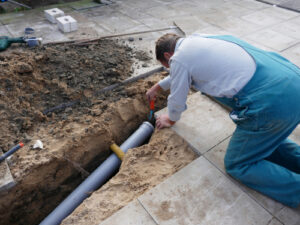
For severe damage — collapsed sections, major offsets, or pipes that have deteriorated beyond repair — pipe bursting or open-trench replacement may be necessary. Quality Plumbing & Rooter evaluates each situation with a camera and recommends the least invasive, most cost-effective solution.
Protecting Your Concord Yard
If you are planting new trees in your Concord yard, keep them at least 10 feet from the sewer lateral. Choose slow-growing species with less aggressive root systems when planting near utility paths. If you are not sure where your sewer lateral runs, a camera inspection can map its path.
For existing trees that are already near the sewer line, regular drain maintenance and periodic camera inspections help you stay ahead of root intrusion before it becomes a repair situation.
Quality Plumbing & Rooter serves Concord and the surrounding area including Clayton, Antioch, and Brentwood. Call (925) 584-1951 to schedule your sewer camera inspection.