


The high water table on Bethel Island is not just a nuisance for basements and crawl spaces — it is a constant threat to the sewer line running under your property. Groundwater pressing against the exterior of a sewer pipe accelerates every type of deterioration: joint separation, corrosion, root intrusion, and pipe settlement. Sewer lines on Bethel Island tend to develop problems sooner than comparable pipes on the mainland, and those problems are often more complex to repair because of the saturated soil conditions.
If you are dealing with sewer symptoms like slow drains, recurring backups, sewage odors, or soggy yard patches, a sewer camera inspection is the essential first step to understanding what is happening underground.
How the Water Table Damages Sewer Pipes
On Bethel Island, the water table can sit within a few feet of the surface during the wet season. A sewer lateral buried three to four feet deep may be partially or fully submerged in groundwater for months at a time.
That submersion creates hydrostatic pressure on the exterior of the pipe. If the pipe has any weakness — a cracked joint, a corroded section, a loose connection — the groundwater pushes in. This infiltration adds volume to the sewer system that it was not designed to handle, and it brings fine soil particles into the pipe that settle as sediment.
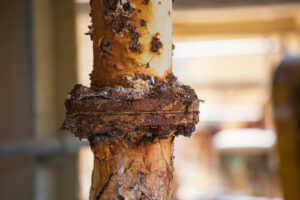
The constant moisture exposure also accelerates corrosion in metal pipes. Cast iron sewer lines on Bethel Island corrode faster than identical pipes in drier inland locations. The bottom of the pipe, which stays wet longest, is the most vulnerable.
Clay tile pipes are affected differently. The mortar between sections absorbs groundwater and softens over time, allowing the joints to open up. Once a joint opens, both groundwater and tree roots enter freely.
Repair Challenges on Bethel Island
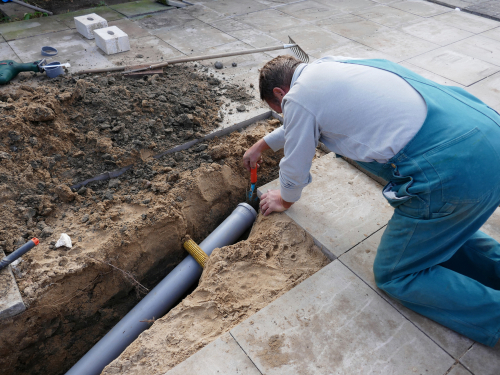
Repairing a sewer line on Bethel Island is more complex than on the mainland because of the saturated soil. Traditional open-trench repair requires dewatering the excavation — pumping groundwater out of the trench continuously while the plumber works. This adds time, cost, and complexity to the job.
Trenchless repair methods are particularly advantageous on Bethel Island because they reduce the amount of excavation needed. Trenchless pipe lining works from inside the existing pipe, installing a new sealed liner that blocks groundwater infiltration at every joint. The liner creates a smooth, jointless pipe that eliminates the entry points that groundwater and roots exploit.
Pipe bursting is another trenchless option that replaces the pipe without trenching the full length. Access pits at each end of the damaged section are easier to dewater than a full-length trench.
When excavation is unavoidable — for severe collapses or alignment issues — a skilled plumber plans the work for the driest time of year and uses proper dewatering equipment to keep the trench workable.
Preventing Sewer Problems on Bethel Island
Regular maintenance is more important on Bethel Island than in any other community in the Quality Plumbing & Rooter service area. The high water table puts constant stress on the sewer line, and problems develop faster.
Schedule a sewer camera inspection every 12 to 24 months to monitor the condition of the pipe. If roots are entering, schedule hydro jetting to clear them before they grow large enough to damage the pipe. If infiltration is detected, discuss lining options with your plumber before the joints deteriorate further.
Quality Plumbing & Rooter serves Bethel Island from our Antioch base. Call (925) 584-1951 for a sewer inspection and honest repair estimate.