


The same hillside terrain that gives Clayton its views and its character also creates specific challenges for the sewer lines running beneath those properties. A sewer lateral on a flat lot in a neighboring city runs at a gentle slope, maybe a quarter-inch of drop per foot, giving waste enough gravity to flow to the main. On a hillside lot in Clayton, that slope can be much steeper, and the pipe may make significant elevation changes between the house and the street.
That steep grade changes how the sewer line wears over time, how clogs form, and how repairs need to be approached. If your Clayton home is showing signs of sewer trouble, working with a plumber who understands hillside sewer systems is critical.
The Steep Grade Problem
On a steep sewer lateral, liquids flow faster than solids. Water races downhill, leaving toilet paper, waste, and other solid material behind. The solids dry out between uses, stick to the pipe walls, and accumulate. Over time, this creates a condition called channeling — a groove wears down the bottom of the pipe where the water flows fastest, while the upper portion of the pipe collects debris.
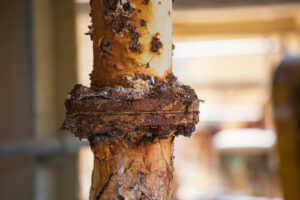
This uneven wear pattern weakens the bottom of the pipe and makes it more susceptible to cracks, root intrusion, and eventual failure. It also means that clogs on steep-grade laterals tend to form in specific spots — usually at bends, transition points, or where the grade changes from steep to shallow.
Tree Roots in Clayton’s Natural Landscape
Clayton sits at the edge of Mount Diablo State Park, and the natural vegetation includes mature oaks, bay laurels, and various native species with deep root systems. Residential landscaping adds ornamental trees, fruit trees, and large shrubs that all contribute root activity near sewer lines.
Root intrusion into Clayton sewer lines follows the same pattern as elsewhere, but the hillside setting can make it harder to access and repair. Sewer laterals on hillside lots may run deeper underground due to the grade change, and the terrain can complicate excavation if traditional open-trench repair is needed.
A sewer camera inspection maps the exact location and depth of the damage, which helps the plumber plan the most efficient repair approach.
Repair Options for Clayton Sewer Lines
For root intrusion in a sound pipe, hydro jetting clears the roots and restores flow. On steep-grade laterals, hydro jetting also removes the solid buildup caused by the separation of liquids and solids during normal use.
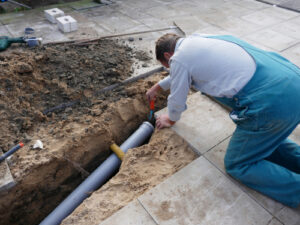
For structural damage — cracked joints, separated connections, or pipe bellies created by soil movement on hillside lots — trenchless pipe lining and pipe bursting offer repair options that minimize excavation on terrain that may be difficult to dig.
Trenchless pipe lining is particularly well-suited for Clayton properties where the existing pipe alignment is intact but the joints or walls are damaged. The epoxy-lined sleeve cures inside the existing pipe, sealing cracks and root entry points without disturbing the hillside landscaping.
For sections that have collapsed or shifted out of alignment, pipe bursting replaces the pipe along the existing path. Access pits are dug at each end of the damaged section, and a new HDPE pipe is pulled through while the old pipe is fractured outward.
Quality Plumbing & Rooter provides a written estimate after every camera inspection. We explain the options, recommend the best approach for your specific property, and let you make the decision. Call (925) 584-1951 to schedule a service.